
Becoming a better volleyball player requires more than simply hitting the ball hard.
Volleyball is a team sport where technique, timing, movement and communication are all connected. A player who develops strong fundamentals can contribute in many different situations.
Whether you are completely new to the sport or already playing regularly, improving the right skills can make a major difference.
1. Serving
Serving starts every rally, making it one of the most important volleyball skills.
Beginners often start with an underhand serve before progressing to an overhand serve.
More advanced players may learn:
- Float serves
- Topspin serves
- Jump serves
Accuracy should come before power.
A serve that consistently lands in the correct area can be more useful than a powerful serve that frequently goes out.
2. Passing
Passing is one of the foundations of volleyball.
A good pass allows the setter to organize the next attack.
Players usually use a forearm platform to control serves and attacks.
Important passing fundamentals include:
- Balanced stance
- Bent knees
- Stable platform
- Controlled movement
- Watching the ball
- Communicating with teammates
3. Setting
The setter often acts as the organizer of an attack.
A setter needs to deliver the ball accurately to attackers while making quick decisions.
They may choose different attacking options depending on the defensive setup.
A good setter therefore needs both technical skill and tactical awareness.
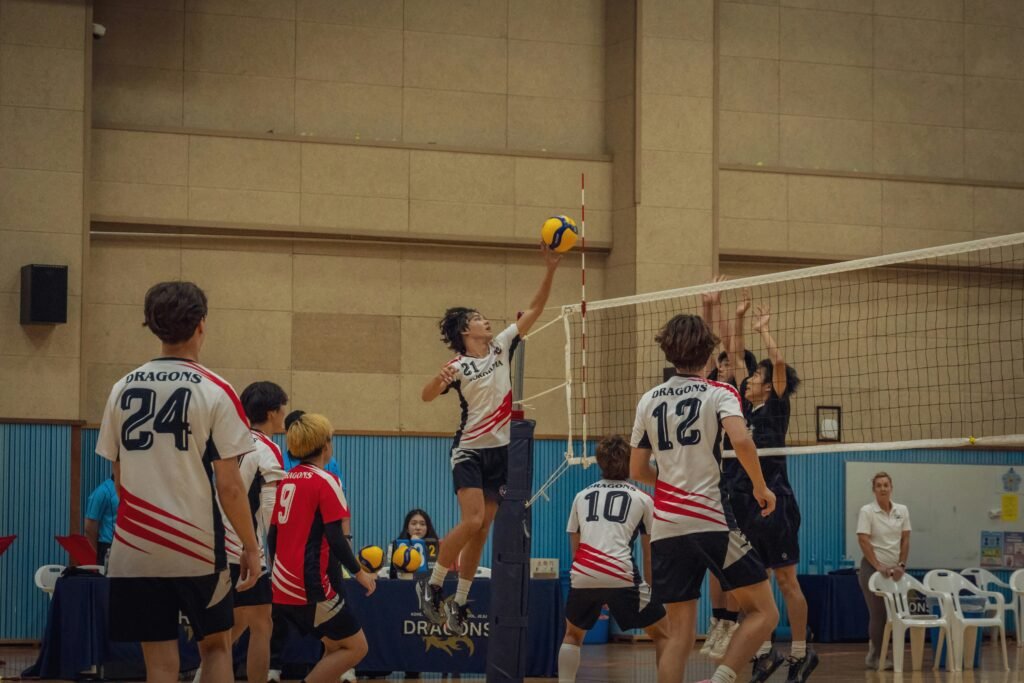
4. Attacking
Attacking is one of the most exciting parts of volleyball.
Players can attack using power, placement or deception.
A strong attacker needs to understand:
- Approach timing
- Jump technique
- Arm swing
- Contact point
- Shot placement
- Block positioning
Hitting harder is not always the answer.
Sometimes a well-placed shot can be more effective than maximum power.
5. Blocking
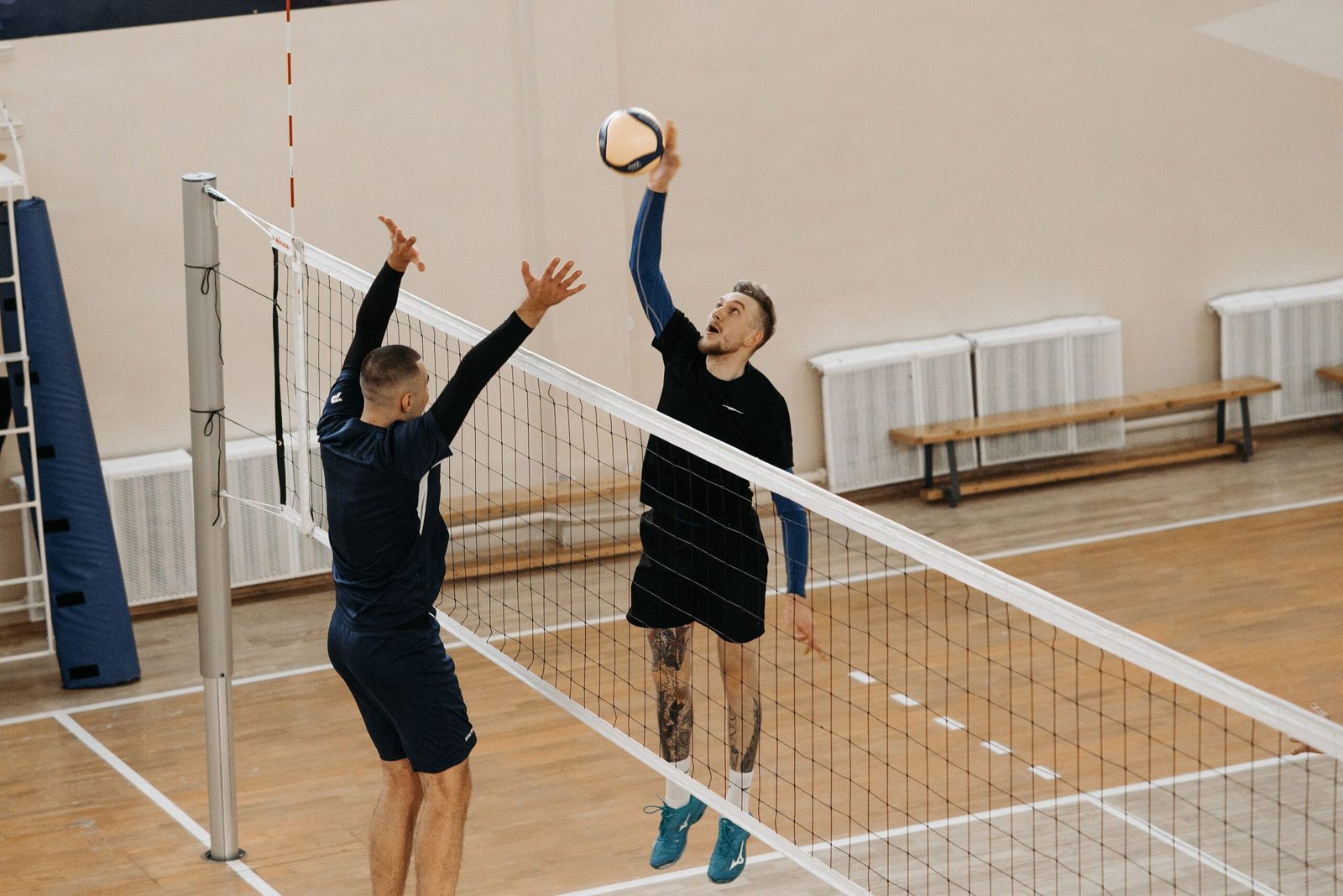
Blocking requires timing and anticipation.
Players need to watch the opposing setter and attacker to predict where the ball may go.
Good blockers focus on:
- Timing
- Footwork
- Hand positioning
- Jumping technique
- Reading the attacker
6. Defensive Movement
Volleyball players must move quickly.
A defensive player may need to move forward, backward or sideways within a fraction of a second.
Maintaining a balanced ready position allows players to react more efficiently.
7. Communication
Communication is one of the most underrated volleyball skills.
Players should clearly communicate when they are taking the ball.
Simple calls can prevent two teammates from going for the same ball or leaving a difficult ball untouched.
8. Reading the Opponent
Experienced players learn to read opposing teams.
They may observe:
- Setter positioning
- Attacker approach
- Block formation
- Serving patterns
- Defensive gaps
This allows them to anticipate plays rather than simply reacting to them.
9. Footwork
Efficient footwork helps players reach the ball without losing balance.
Good footwork is especially important for setters, blockers and attackers.
Players should practice moving into position before attempting advanced techniques.
10. Consistency
One of the biggest differences between beginners and experienced players is consistency.
A player who can perform a basic skill correctly again and again provides enormous value to a team.
Practice should therefore include repetition under different conditions.
How to Improve Faster
Players can structure training around specific skills.
For example:
Session 1: Serving and passing
Session 2: Setting and movement
Session 3: Attacking and blocking
Session 4: Match situations and communication
Recording training sessions can also help players identify technical issues.
Frequently Asked Questions
What is the most important volleyball skill?
Passing, serving, setting, attacking and defensive movement are all important. The priority depends on the player’s position and experience.
How can beginners improve volleyball?
Beginners should focus on fundamentals such as serving, passing, movement and communication before attempting advanced techniques.
Is power important in volleyball?
Power can be useful, especially when attacking or serving, but accuracy, timing and placement are equally important.
Conclusion
Improving at volleyball requires patience and consistent practice.
Strong fundamentals provide the foundation for advanced techniques. Players who develop their serving, passing, setting, attacking, blocking, movement and communication can become more complete and reliable teammates.