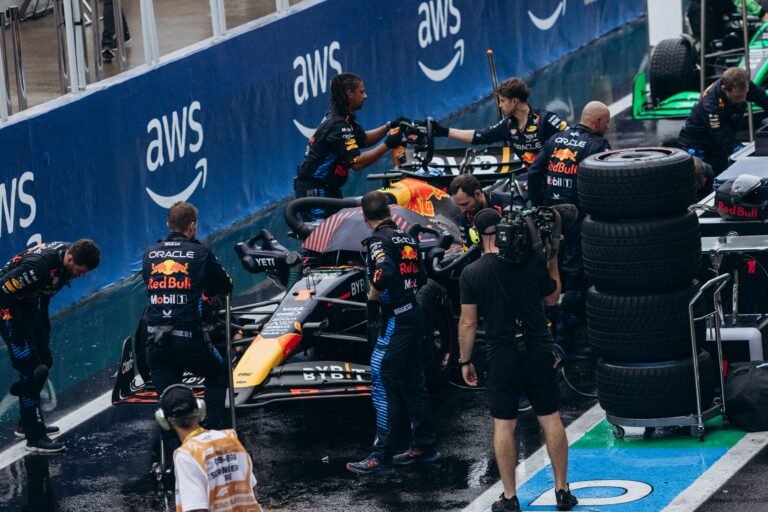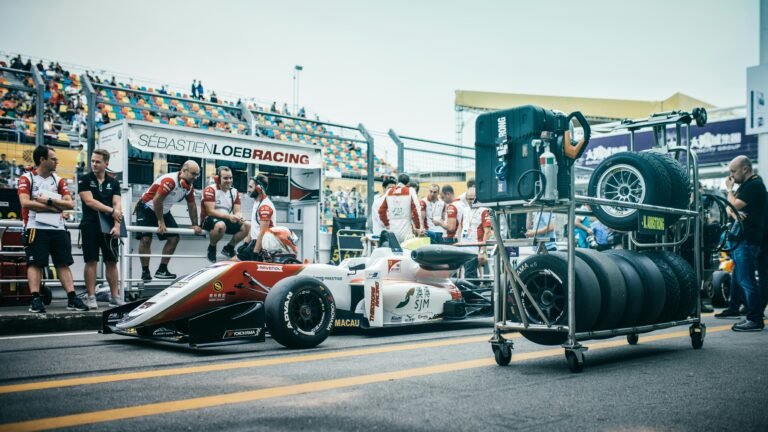


A race car does not simply arrive at a circuit and immediately become ready for competition.
Behind every race is a detailed preparation process involving engineers, mechanics, drivers, technicians and strategists.
The car must be inspected, configured for the circuit and prepared for changing conditions.
Understanding the Circuit
The first step is understanding the track.
Engineers examine:
- Corner types
- Straight lengths
- Braking zones
- Track surface
- Elevation changes
- Tire demands
- Overtaking areas
Different circuits require different approaches.
Choosing the Car Setup
A race car can be adjusted in many ways.
Teams may change:
- Suspension
- Ride height
- Aerodynamics
- Brake settings
- Differential settings
- Gear ratios where regulations allow
- Tire pressures
The objective is to create a setup appropriate for the circuit and conditions.
Aerodynamic Setup
Downforce helps a race car generate grip through corners.
However, more aerodynamic load can also increase drag.
Teams therefore search for an appropriate balance between cornering performance and straight-line speed.
Suspension Setup
Suspension affects how the car responds to braking, acceleration and cornering.
Engineers can adjust different parameters depending on the car and regulations.
A setup that works at a smooth circuit may not be suitable for a track with aggressive kerbs or bumps.
Tire Preparation
Tires are among the most important components on a race car.
Teams need to understand:
- Tire temperature
- Tire wear
- Track temperature
- Grip levels
- Expected race distance
Choosing and managing the appropriate tire strategy can have a major effect on race performance.
Driver Feedback
The driver provides information that data alone cannot fully explain.
They may report:
- Understeer
- Oversteer
- Braking instability
- Poor traction
- Tire behavior
- Balance problems
Engineers combine this feedback with telemetry.
Data Analysis
Modern motorsport teams collect enormous amounts of data.
Engineers can analyze:
- Speed
- Braking
- Acceleration
- Engine parameters
- Tire behavior
- Lap times
- Sector performance
This helps identify where the car can improve.
Mechanical Inspection
Before competition, mechanics inspect the car carefully.
They check components for damage, wear and correct installation.
Safety-critical systems receive particular attention.
Practice Sessions
Practice allows teams to test their assumptions.
Drivers can provide feedback while engineers compare actual results with simulations and previous data.
Teams can then adjust the car.
Race Strategy
Preparation also includes planning possible race scenarios.
Teams may consider:
- Tire strategy
- Pit windows
- Weather
- Safety cars
- Fuel consumption
- Traffic
- Overtaking opportunities
Strategy may change once the race begins.
Backup Planning
Motorsport teams also need contingency plans.
Unexpected weather, mechanical problems, incidents or safety-car periods can completely change a race.
Teams need to react quickly rather than relying exclusively on their original plan.
Frequently Asked Questions
How do race teams set up a car?
Engineers adjust areas such as suspension, aerodynamics, brakes, tires and other systems according to the circuit and regulations.
Why is driver feedback important?
Drivers can describe how the car behaves in situations that may not be fully obvious from telemetry alone.
Do teams use data to prepare race cars?
Yes. Data analysis is an important part of modern motorsport preparation.
Conclusion
Preparing a race car is a complex process involving technical inspection, circuit analysis, setup work, tire management, driver feedback and data analysis.
The car that appears on the starting grid represents the work of an entire team.
Motorsport success therefore depends not only on the driver but also on the engineers, mechanics, strategists and technicians working behind the scenes.