
A strong volleyball team needs more than powerful attackers.
Defense determines whether a team can survive difficult attacks, extend rallies and create opportunities to score.
Volleyball defense combines blocking at the net with digging and positioning in the back court.
What Is Volleyball Defense?
Defensive play is designed to prevent the opposing team from scoring.
It includes:
- Blocking
- Digging
- Court positioning
- Serve reception
- Communication
- Transition movement
Every player has an important defensive responsibility.
Blocking
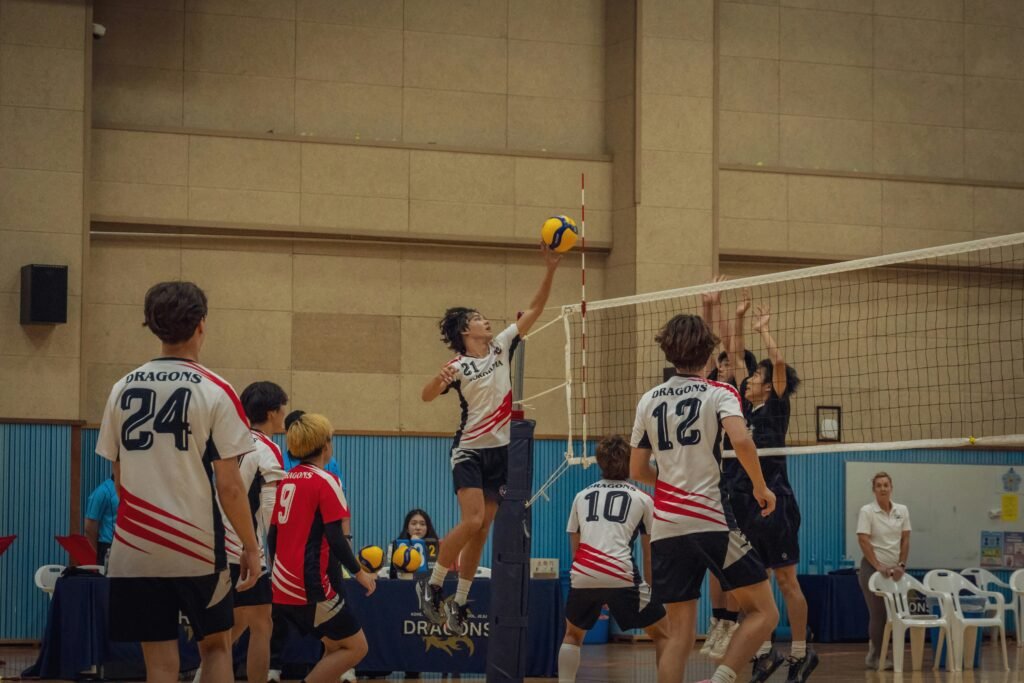
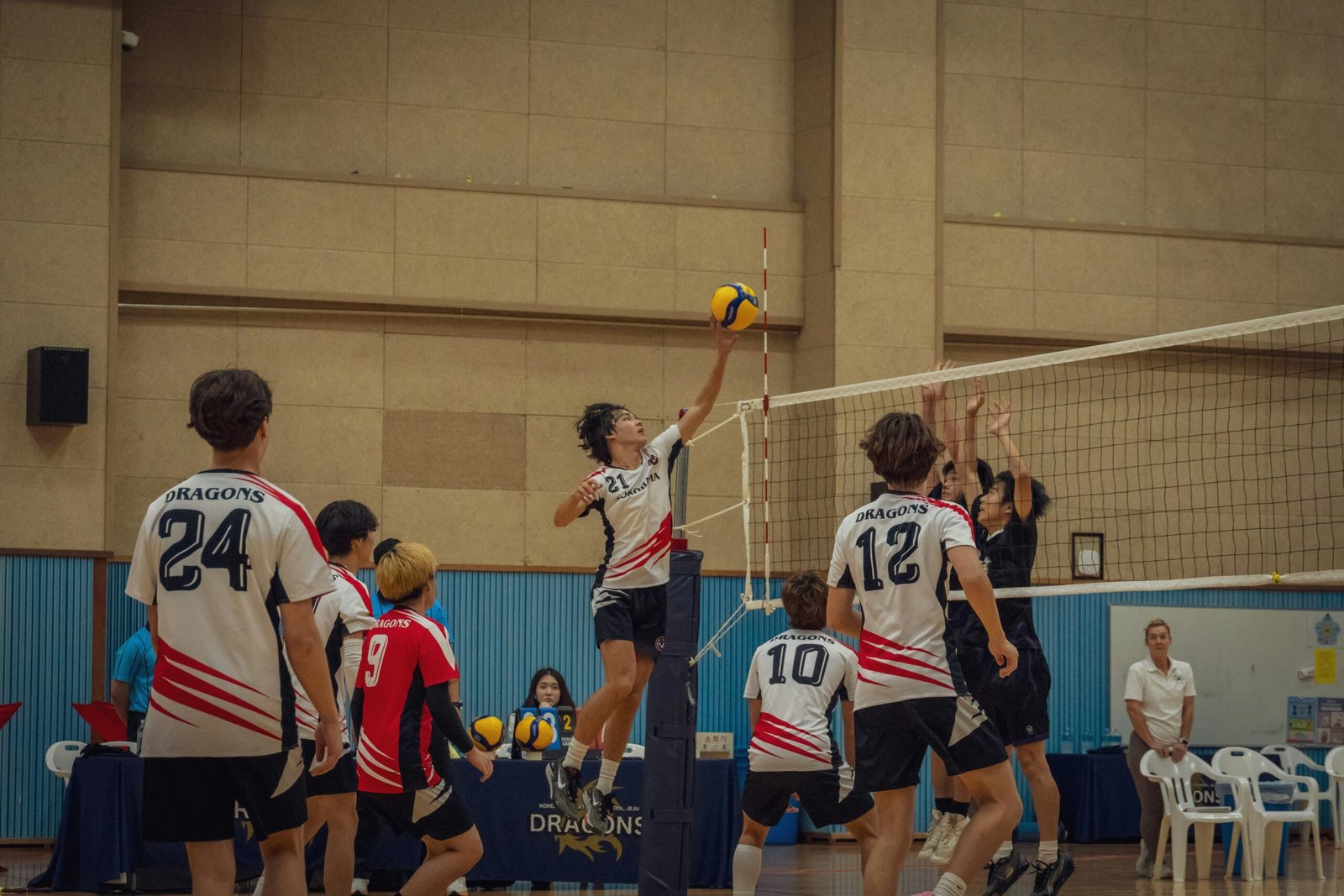
Blocking takes place near the net.
Front-row players jump with their hands above the net to intercept or redirect an opponent’s attack.
A good block can produce an immediate point or slow the ball enough for a defender to play it.
Single Block
A single block uses one player.
It can be useful when the attack develops quickly or when tactical circumstances make a single blocker appropriate.
Double Block
Two blockers work together to cover more of the attacker’s available angles.
Timing and coordination are essential.
Triple Block
Three front-row players can sometimes form a triple block.
This provides substantial coverage but also leaves fewer players available for other defensive responsibilities.
Reading the Attacker
Blockers should not simply jump whenever the ball approaches.
They need to observe:
- Setter position
- Attacker approach
- Set direction
- Attacker’s body position
- Available hitting angles
Reading the play helps improve blocking decisions.
Digging
A dig is a defensive technique used to control an attacking ball.
The defender uses their platform to redirect the ball toward a teammate, ideally allowing the team to build another attack.
Defensive Positioning
Back-row players need to position themselves according to the expected attack.
They may cover:
- Cross-court attacks
- Line attacks
- Tips
- Balls deflected by blockers
Positioning needs to change as the rally develops.
Block-Defense Connection
Blocking and back-court defense work together.
The block can take away certain attacking angles while defenders position themselves to cover the remaining areas.
This is sometimes described as creating a defensive system.
Communication
Communication is extremely important.
Players may call out:
- Block assignments
- Attacking locations
- Tips
- Coverage
- Ball calls
Clear communication reduces confusion.
Transition From Defense to Attack
A successful defensive play is only the beginning.
After controlling the opponent’s attack, the team needs to transition quickly into offense.
The setter must organize the next attack while other players prepare to approach.
Frequently Asked Questions
What is a dig in volleyball?
A dig is a defensive technique used to control an opponent’s attack and keep the ball playable.
How does blocking help defense?
A block can stop an attack directly or limit the angles available to the attacker, making the ball easier for back-row defenders to play.
Why is communication important in volleyball defense?
Players need to coordinate blocking, positioning and coverage so that different defenders do not leave the same area uncovered.
Conclusion
Volleyball defense is a coordinated system rather than a collection of individual reactions.
Blockers need to read attackers, while back-row defenders must anticipate where the ball may travel.
When blocking, positioning, digging and communication work together, a team can turn difficult attacks into opportunities for its own offense.