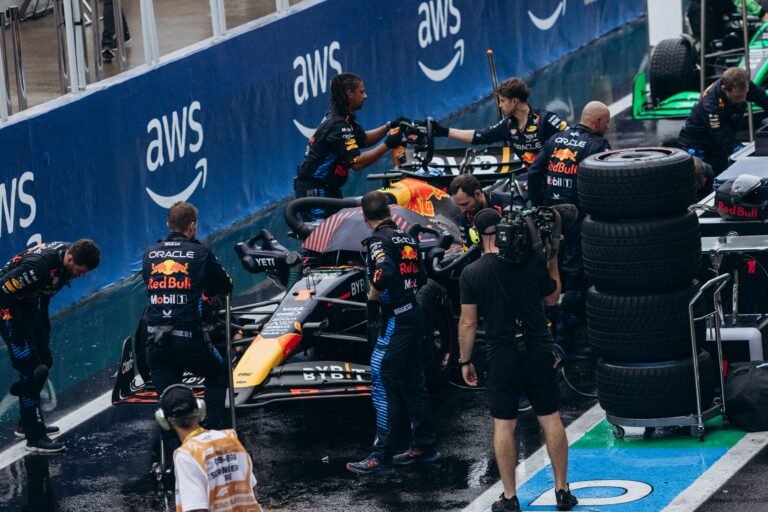

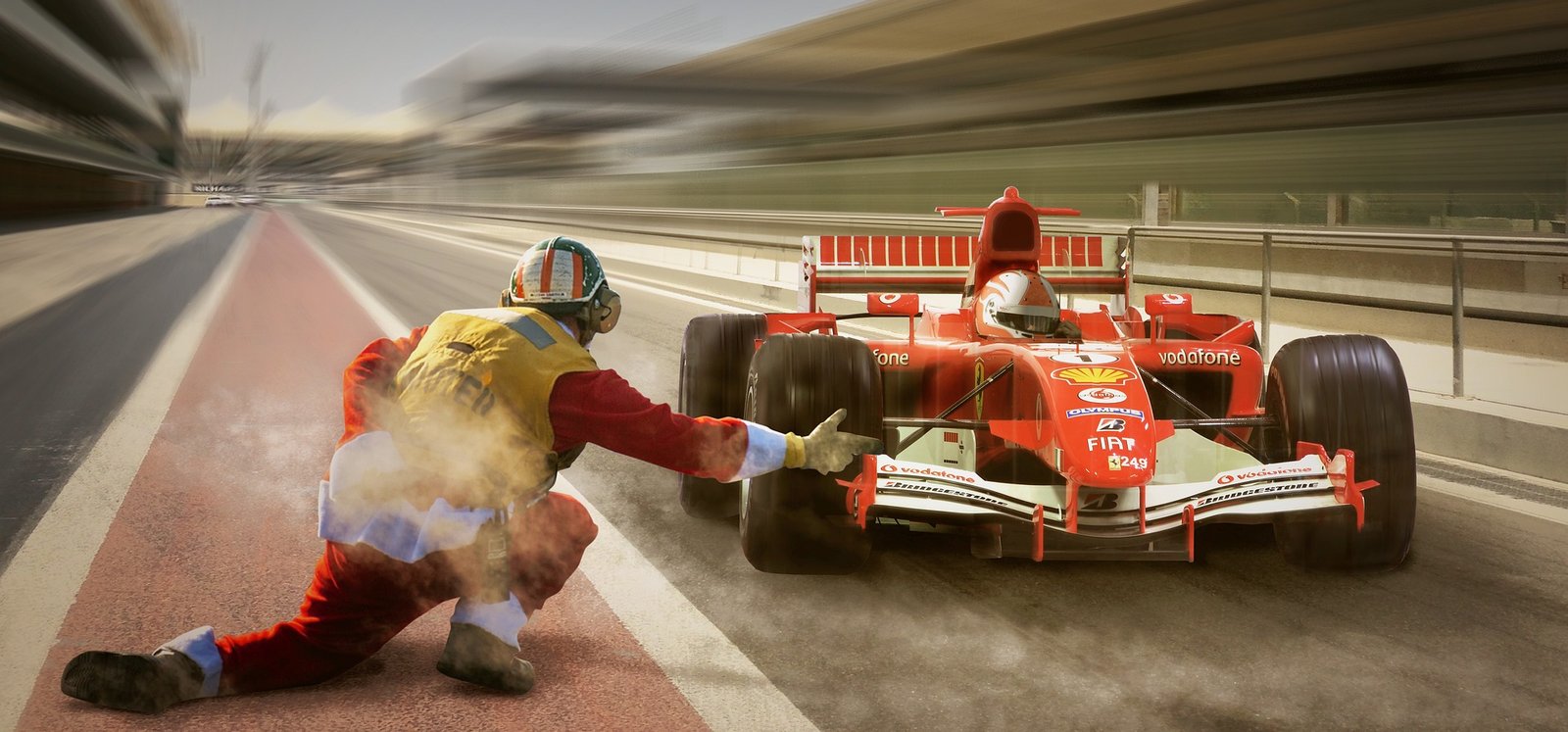
A Formula 1 pit stop may last only a few seconds, but an enormous amount of work happens during that short period.
When a driver enters the pit lane, a large team of mechanics prepares to perform a carefully rehearsed sequence of actions.
The most visible task is changing the tyres, but a pit stop involves much more than four wheel changes.
Entering the Pit Lane
The driver must enter the pit lane safely while following the speed limit.
The car approaches its designated pit box, where the pit crew is waiting.
Timing and positioning are crucial.
A small mistake can cost valuable time.
The Car Stops
Once the car reaches its pit box, the crew immediately begins its work.
The car is lifted from the ground using specialized jacks.
This allows the wheels to be removed and replaced.
Wheel Guns Remove the Wheel Nuts
Mechanics use pneumatic wheel guns to remove and tighten wheel nuts.
Each wheel has a dedicated mechanic responsible for changing it.
Speed is important, but accuracy is essential.
A poorly secured wheel can create a serious problem.
New Tyres Are Installed
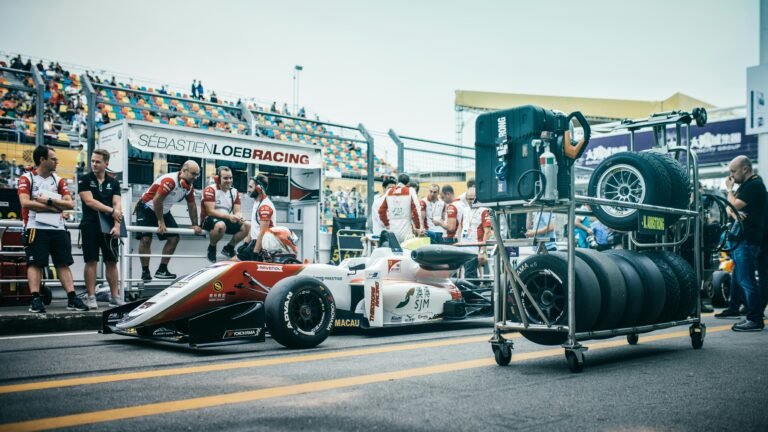
Fresh tyres are brought into position.
The mechanics remove the old tyres and install the new ones as quickly as possible.
Each wheel must be correctly aligned before the wheel nut is secured.
Front and Rear Jack Operators
Other crew members operate the front and rear jacks.
Their job is to lift and release the car at the correct moments.
They must coordinate with the tyre mechanics.
The Release
Once the work is complete, the team checks that the car is ready to leave.
The driver then accelerates out of the pit box.
The crew must ensure there are no loose tools, improperly secured wheels, or nearby hazards.
Why Pit Stops Are So Important
A pit stop costs track position and time.
However, staying on worn tyres can also cost time.
Teams therefore calculate whether a stop is worth making.
This is where pit-stop strategy becomes part of the broader race strategy.
Pit Stops Are Teamwork
A successful stop requires coordination among many people.
Everyone has a specific responsibility.
There is no room for hesitation.
The sequence is practiced repeatedly before and during race weekends.
What Can Go Wrong?
A pit stop can be affected by:
- Slow wheel removal
- Wheel nut problems
- Tyre positioning
- Traffic
- Unsafe release
- Communication errors
- Equipment problems
Even a tiny delay can affect the driver’s race.
Beyond Tyre Changes
Although tyre changes are the standard reason for a modern F1 pit stop, teams can also use pit stops for repairs or adjustments when necessary.
Damage may require additional work.
Such stops can cost significantly more time than a routine tyre change.
Frequently Asked Questions
How long does an F1 pit stop take?
The actual stationary tyre-changing process can be completed extremely quickly, but the total time lost also depends on pit-lane entry, travel through the pit lane, and exit.
Why do F1 cars change tyres?
Teams change tyres when fresh rubber provides a strategic or performance advantage.
How many people work on a pit stop?
A large group of specialized crew members can be involved, with different people responsible for specific tasks.
Final Thoughts
An F1 pit stop is a perfect example of motorsport teamwork.
The driver may receive most of the attention, but behind that driver is a highly coordinated crew working under enormous time pressure.
A few seconds can make a significant difference to the rest of a Grand Prix.
SportsOrbit.world — Speed is a team effort.